Australia Introduces New Driver Badge – Australia is entering a new phase of road safety policy as updated driving rules for older motorists take effect nationwide. The introduction of a new driver badge system aims to balance independence with safety, especially for seniors who rely on personal vehicles for daily mobility. These changes reflect Australia’s ageing population and the need for clearer identification, medical oversight, and fair driving assessments. Rather than removing licences outright, the updated approach focuses on capability-based driving, ensuring experienced older drivers can continue driving safely while reducing risks on Australian roads.
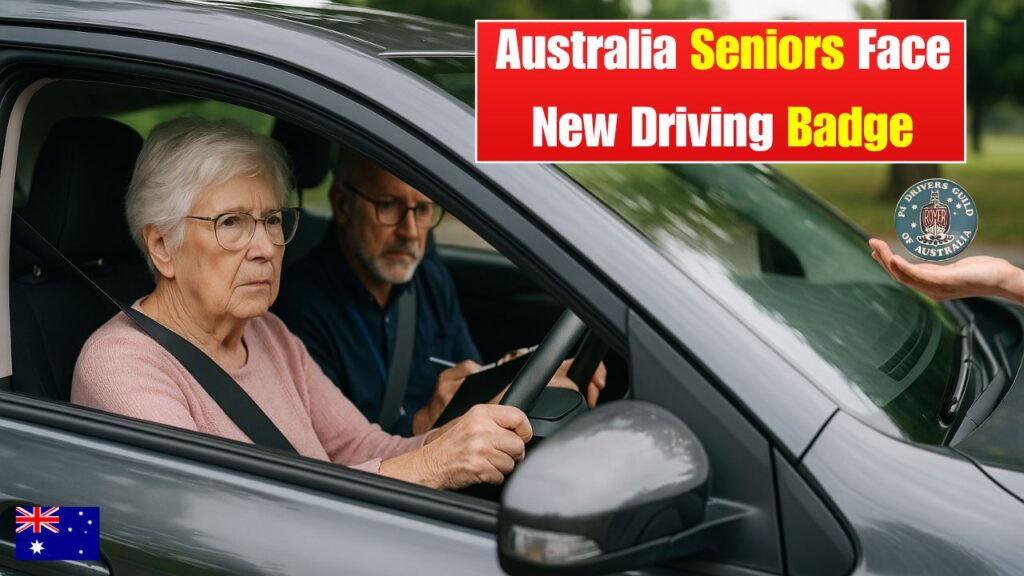
New Senior Driver Badge Rules for Australian Citizens
The new senior driver badge introduced for Australian citizens is designed to modernise how age-related driving is managed. Instead of blanket restrictions, the badge system recognises individual fitness to drive. Older motorists may now receive a visible badge linked to licence conditions, such as daylight-only driving or local-area limits. For many Australians, this provides reassurance rather than punishment. Medical reviews are more structured, focusing on vision, reaction time, and cognitive health. The Australian approach emphasises dignity and safety, ensuring senior drivers are assessed fairly while maintaining public confidence in road safety standards.

Updated Driving Requirements for Older Australians Nationwide
Across Australia, updated driving requirements for older Australians focus on gradual transitions rather than abrupt licence loss. Transport authorities now encourage regular health checks and self-reporting, supported by general practitioners. The badge system allows licensing bodies to communicate driving conditions clearly to enforcement officers. This reduces confusion during roadside checks and promotes transparency. Importantly, the changes acknowledge that ageing affects individuals differently. Many older Australians remain capable drivers well into later life, and the updated rules aim to support continued mobility while reducing accident risks through targeted oversight.

| Criteria | Previous Rules | New Badge System |
|---|---|---|
| Age Threshold | Mandatory reviews at fixed age | Flexible, health-based reviews |
| Medical Assessment | Irregular or reactive | Scheduled and standardised |
| Licence Conditions | Often unclear | Clearly displayed via badge |
| Driving Independence | Frequently reduced | Maintained with conditions |
| Road Safety Focus | Age-based | Ability-based |
What the New Driver Badge Means Across Australia
Across Australia, the new driver badge represents a shift toward respectful, evidence-based road safety. Instead of viewing age as a limitation, authorities now prioritise functional ability. This benefits seniors who can continue driving with confidence while reassuring the wider community about safety standards. The badge also helps families understand licence conditions, reducing conflict around driving decisions. For regional and suburban Australians, where public transport is limited, this system supports independence without compromising safety, making it a practical solution for modern Australian transport needs.
Senior Mobility and Road Safety for Australians
Senior mobility remains a key policy issue for Australians, particularly as communities expand beyond city centres. Driving often supports social connection, healthcare access, and quality of life. The new badge system aligns road safety with wellbeing by encouraging responsible driving rather than forced cessation. Australian transport planners recognise that safe senior drivers contribute positively to communities. With clear guidelines, medical input, and visible licence conditions, the system promotes safer roads while respecting the autonomy of older Australians.
Frequently Asked Questions (FAQs)

1. Is the new driver badge mandatory for all seniors in Australia?
No, it applies based on age thresholds and individual medical or licensing assessments.
2. Does the badge mean seniors are unsafe drivers?
No, it simply communicates any driving conditions linked to individual capability.
3. Will older Australians lose their licences under the new rules?
Only if medical assessments show they are unfit to drive safely.
4. Who manages the senior driver badge system in Australia?
State and territory transport authorities oversee assessments and badge issuance.