Australia’s retirement landscape is quietly but firmly shifting, and the long-standing idea that life slows down at 67 is being re-examined. As life expectancy rises and work patterns change, many Australians are finding that the traditional state pension age no longer defines when retirement truly begins. For some, working longer feels financially necessary, while for others it’s a personal choice tied to purpose and wellbeing. This evolving conversation is reshaping how Australians plan their later years, blending policy changes with real-world lifestyle decisions.

Australia’s retirement age rethink and pension realities
For decades, the Age Pension age has acted as a psychological finish line, but that line is starting to blur. In Australia, policy adjustments and demographic pressure are pushing people to reconsider when they stop working. Longer lifespans mean more years to fund, making longer working lives a practical response for many households. At the same time, employers are adapting to age-friendly workplaces that value experience. With rising living costs, income sustainability has become a central concern. Rather than a fixed endpoint, retirement is increasingly seen as a transition shaped by personal capacity and financial readiness, not just a birthday.
 Over-70 Aussie Drivers: Licence Rules Changing from 31 December 2025 - What Seniors Need to Do

Why the Australian state pension no longer defines retirement
The state pension was designed for a different era, when shorter life expectancy made early retirement manageable. Today, Australians often spend decades post-work, which changes the equation. Many are choosing to stay employed part-time to maintain cash flow stability and social connection. Superannuation balances vary widely, so retirement timing flexibility is becoming essential. Policy signals also encourage gradual workforce exit instead of abrupt stops. For individuals, the focus is shifting toward quality of life planning, where retirement happens when finances, health, and personal goals align.
 Centrelink Age Pension and Super Rules Align from December 31 – Here’s What It Means for You
How Aussies are redefining work and retirement after 67
Across Australia, retirement now looks different depending on the person. Some transition into consulting or casual roles, valuing purposeful engagement over full-time hours. Others delay retirement to strengthen savings and reduce reliance on government income support. Flexible work laws and remote roles make extended participation more achievable than before. Importantly, this shift empowers people to design self-directed retirement paths that suit their health and ambitions. The idea of stopping completely at 67 is giving way to a more personalised approach.
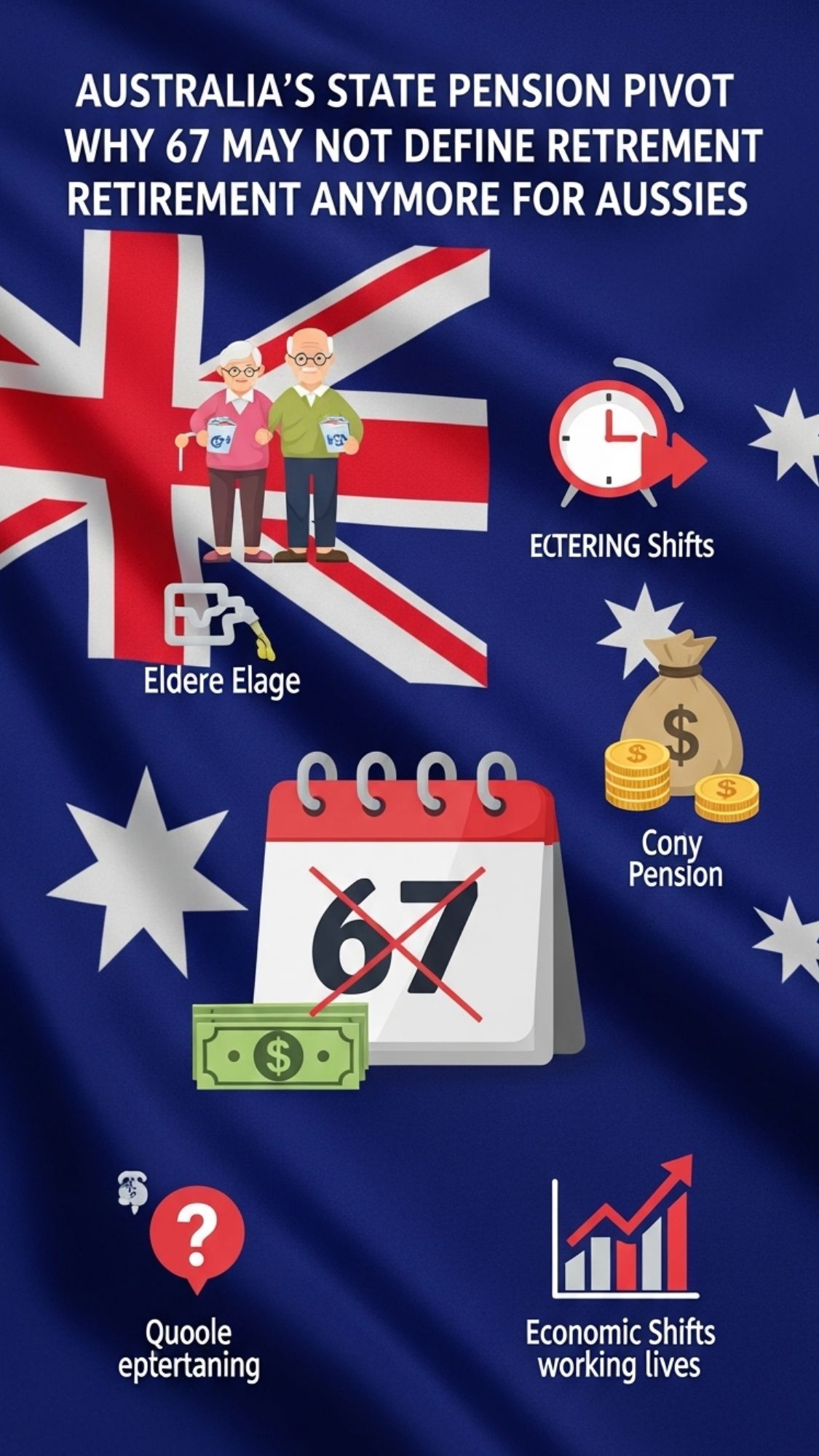
What this shift means for Australia’s future retirees
Australia’s pension pivot signals a deeper cultural change around ageing and work. Retirement is no longer a single event but a phased process that can stretch over years. This reality encourages earlier planning, realistic budgeting, and honest conversations about health and goals. With expectation resets underway, Australians are learning to balance security with fulfilment. The message is clear: while the pension provides a safety net, individual choice matters more than ever. Future retirees who embrace flexibility and planning are likely to navigate this transition with greater confidence and control.
| Aspect | Traditional View | Emerging Reality |
|---|---|---|
| Retirement Age | Stops at 67 | Flexible timing |
| Work Pattern | Full stop | Gradual exit |
| Income Source | Pension-led | Mixed income |
| Lifestyle Focus | Rest-centric | Purpose-driven |
| Planning Style | Age-based | Goal-based |
Frequently Asked Questions (FAQs)
1. Is the Age Pension age changing in Australia?
The eligibility age remains 67, but retirement decisions are becoming more flexible.
 Skilled Visa Income Threshold Raised in 2025 – New Rules Could Impact Thousands of Migrants
2. Do Australians have to retire at 67?
No, many choose to work longer or reduce hours gradually.
3. Why are people delaying retirement?
Longer life expectancy and financial needs are key reasons.
4. Does working longer affect pension eligibility?
Income and assets can influence payments, but working itself is allowed.