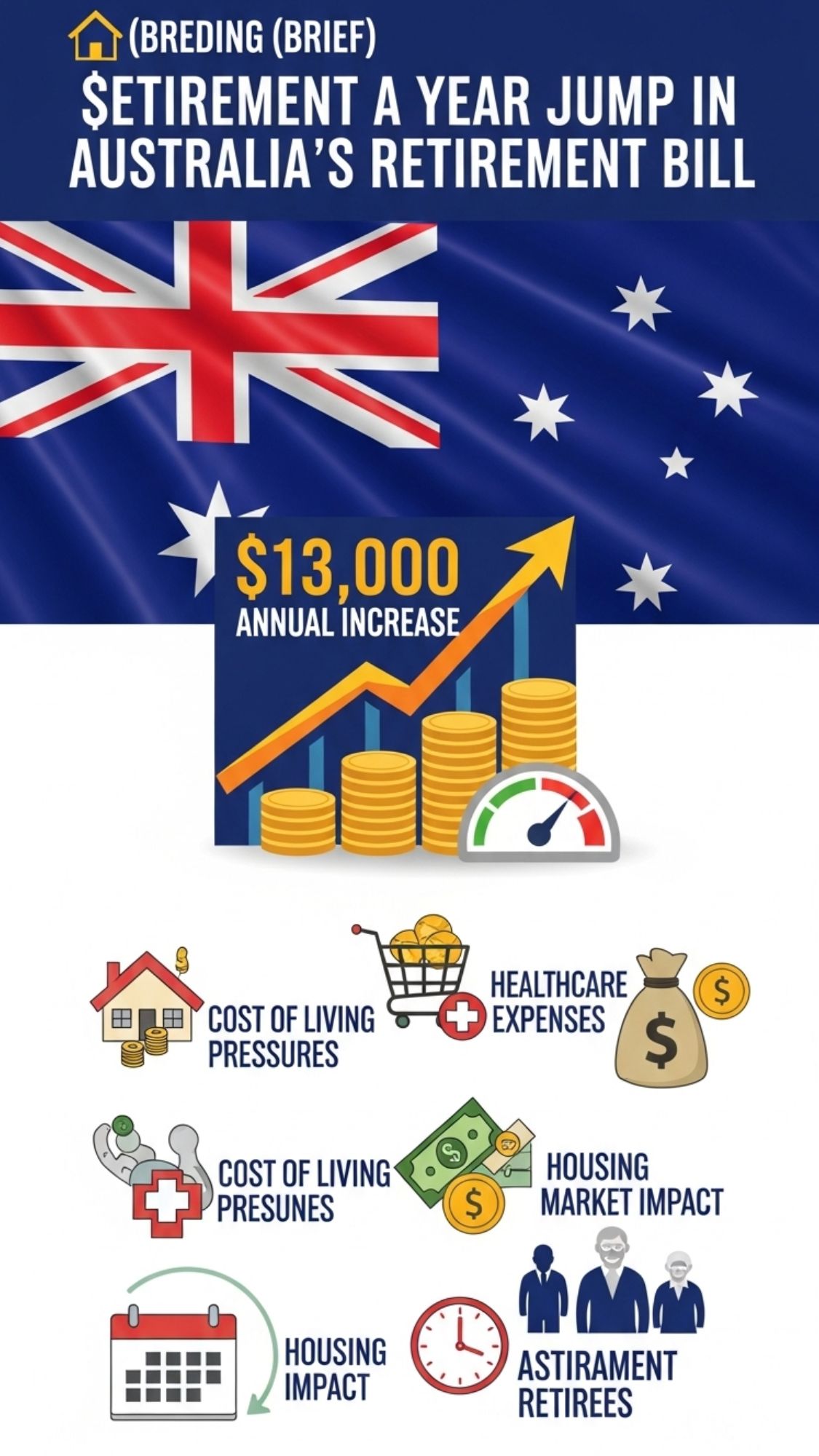
Australian retirees are facing an uncomfortable reality as the cost of retirement continues to surge across the country. Recent estimates show that the average retirement bill has jumped by around $13,000 a year, driven by higher living costs, healthcare expenses, and housing pressures. For many older Australians, this shift is forcing a rethink of long-held retirement plans. Whether you rely on superannuation, the Age Pension, or a mix of both, understanding what’s driving this increase is essential to staying financially stable in Australia’s rapidly changing retirement landscape.

Why Australia’s Retirement Costs Are Rising Faster
The sharp rise in retirement expenses didn’t happen overnight. Inflation has pushed up everyday essentials, from groceries to insurance, while energy and healthcare costs continue to bite. Retirees are also spending more on services that support independent living, such as home maintenance and mobility aids. Many are surprised by hidden living costs that weren’t an issue a decade ago. Add to this rising healthcare bills, increased council rates, and higher utility charges, and the annual budget gap quickly widens. Even those who planned carefully are now adjusting to longer retirement spans that stretch savings further than expected.



How the $13,000 Retirement Gap Affects Seniors
An extra $13,000 a year can significantly change day-to-day retirement choices. Some retirees are cutting back on travel, hobbies, or private health cover just to balance their budgets. Others are delaying retirement or returning to part-time work to protect savings. The impact is strongest for single retirees and renters, who face housing affordability pressure without the buffer of shared costs. Many are also feeling super savings strain as market volatility affects balances. For Age Pension recipients, fixed income limits mean there’s little room to absorb sudden price rises.
What Retirees Can Do to Manage Higher Costs
While the numbers look daunting, there are practical steps retirees can take. Reviewing spending regularly helps identify areas to trim without sacrificing quality of life. Making full use of concessions, rebates, and senior discounts can ease daily expense stress. Financial advisers also suggest revisiting drawdown strategies to improve cash flow planning. Some retirees downsize or relocate to reduce housing cost burden, while others explore part-time work for income flexibility options. The key is adapting early rather than reacting when savings start to feel tight.
What This Means for Australia’s Retirement Future
This $13,000 jump is more than a short-term shock—it signals a broader shift in how Australians must approach retirement. Longer lifespans, changing lifestyles, and economic uncertainty mean retirement planning now needs ongoing attention. Policymakers may face pressure to review support settings, but individuals can’t rely on reforms alone. Building buffers, staying informed, and adjusting expectations are becoming essential. For today’s retirees and those nearing retirement, understanding future cost trends and maintaining financial resilience mindset will be critical to preserving independence and peace of mind.

| Expense Area | Estimated Annual Increase | Main Driver |
|---|---|---|
| Groceries & Essentials | $3,200 | Inflation |
| Healthcare | $2,800 | Medical & insurance costs |
| Housing & Rates | $3,500 | Rent, maintenance, council fees |
| Utilities & Energy | $2,000 | Electricity and gas prices |
| Transport & Services | $1,500 | Fuel and service charges |
Frequently Asked Questions (FAQs)
1. Why has retirement become more expensive in Australia?
Higher inflation, healthcare costs, and housing expenses are the main reasons.
2. Does the Age Pension cover the $13,000 increase?
No, the Age Pension alone usually doesn’t fully cover this additional cost.
3. Are homeowners affected as much as renters?
Renters are generally more impacted due to rising rents and fewer buffers.
4. Can retirees reduce these higher costs?
Yes, by reviewing budgets, using concessions, and adjusting retirement plans early.