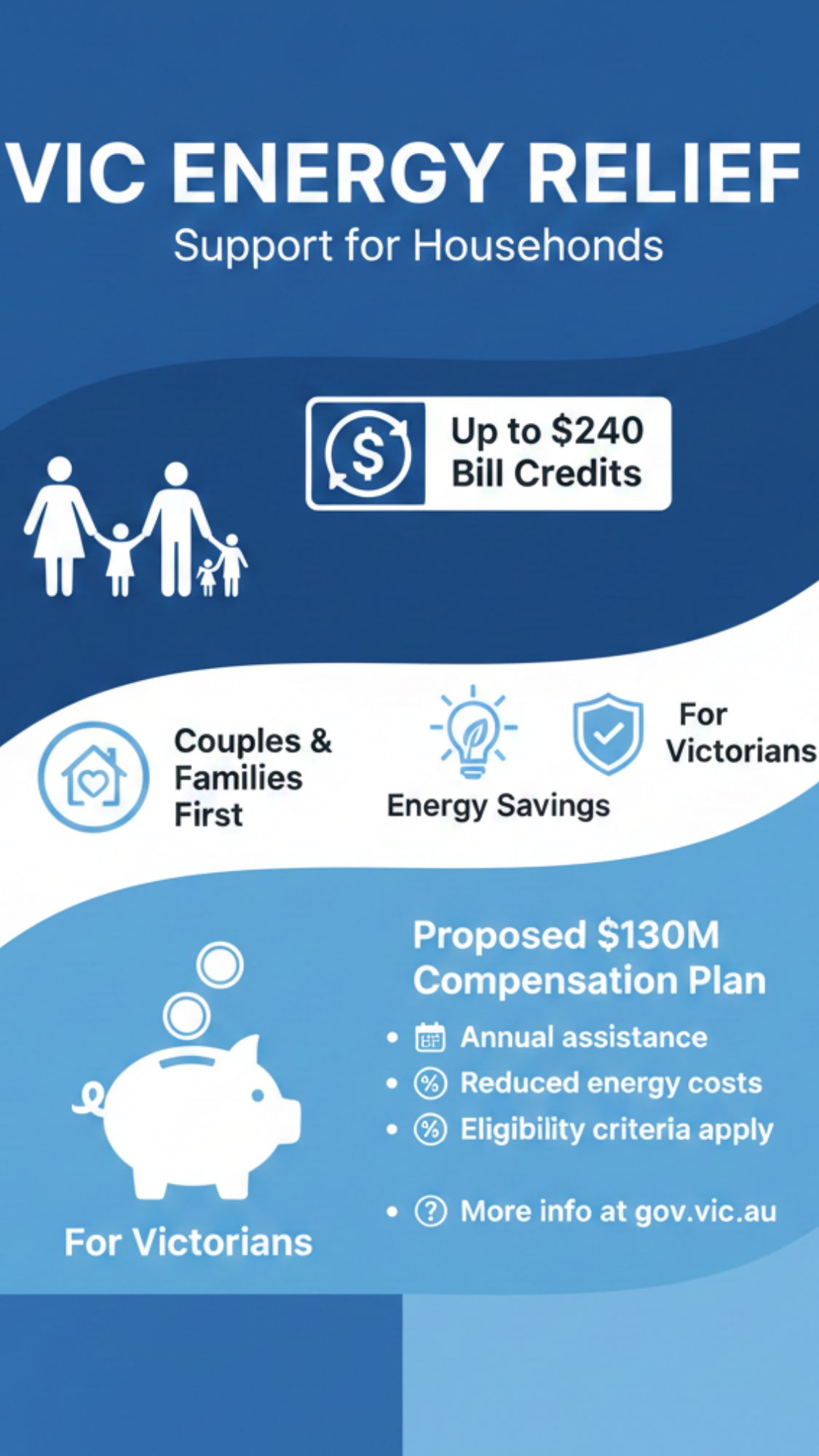
Victorian households could soon see meaningful relief on their power bills as Australia considers a proposed $130 million compensation plan aimed at easing cost-of-living pressure. The plan puts couples and families first, offering bill credits of up to $240 for eligible Victorians if approved. With energy prices remaining a major concern across the country, the proposal is designed to support everyday households rather than one-off handouts. For many families juggling rent, groceries, and utilities, these credits could provide timely breathing room during a financially tight period.

Victorian bill credits proposal targets couples and families
The proposed compensation plan focuses squarely on households most affected by rising energy costs, particularly couples and families managing shared expenses. Under the model, eligible homes could receive bill credit relief applied directly to electricity accounts, reducing out-of-pocket costs. The government has positioned the plan as family-focused support, ensuring assistance reaches those with higher household usage. Unlike rebates that require applications, the credits are expected to be automatically applied through energy retailers. For many Victorians, this approach means lower power stress without additional paperwork, helping households manage budgets more confidently.


$130m compensation plan and how bill credits may work
The $130 million proposal is structured to deliver practical help rather than symbolic gestures. If approved, funds would be distributed as direct energy offsets, reducing electricity bills rather than issuing cash payments. This approach supports cost control measures while limiting misuse of funds. Authorities have indicated that credits could appear during peak billing periods, offering timely household relief. By spreading support across eligible accounts, the plan aims for broad household coverage, ensuring that assistance reaches thousands of Victorian families facing persistent energy pressures.

Who benefits most from the proposed Victorian bill credits
While the plan is broad, couples and families are clearly prioritised due to higher average electricity usage. Households with children, shared living arrangements, or dependants stand to gain the most through higher usage households support. Eligibility is expected to align with existing concession or income thresholds, helping middle-income families as well as lower-income groups. For many, these credits could mean monthly savings impact that ease day-to-day expenses. Overall, the proposal reflects a shift toward targeted household help rather than blanket subsidies.
What this compensation plan could mean for Victorian households
If implemented, the proposed bill credits could play a stabilising role for household finances across Victoria. While $240 may not eliminate energy costs, it offers meaningful bill reduction during periods of high demand. The plan also signals a commitment to consumer cost protection as energy markets remain volatile. For families planning their yearly budgets, this support could provide short-term financial ease and reduce anxiety around utility bills. In the broader context, the proposal reinforces the idea that household energy relief remains a policy priority.
| Category | Proposed Detail |
|---|---|
| Maximum Credit | Up to $240 per household |
| Total Funding | $130 million compensation pool |
| Target Group | Couples and families in Victoria |
| Payment Method | Automatic electricity bill credit |
| Purpose | Energy cost-of-living relief |
Frequently Asked Questions (FAQs)
1. Who is eligible for the proposed bill credits?
Eligibility is expected to focus on Victorian couples and families meeting set household criteria.
 Over-70 Aussie Drivers: Licence Rules Changing from 31 December 2025 - What Seniors Need to Do
2. How much could households receive?
Eligible households may receive electricity bill credits of up to $240.
3. Will an application be required?
The credits are likely to be applied automatically through energy retailers.
4. When could the credits appear on bills?
If approved, credits would likely be applied during upcoming billing cycles.