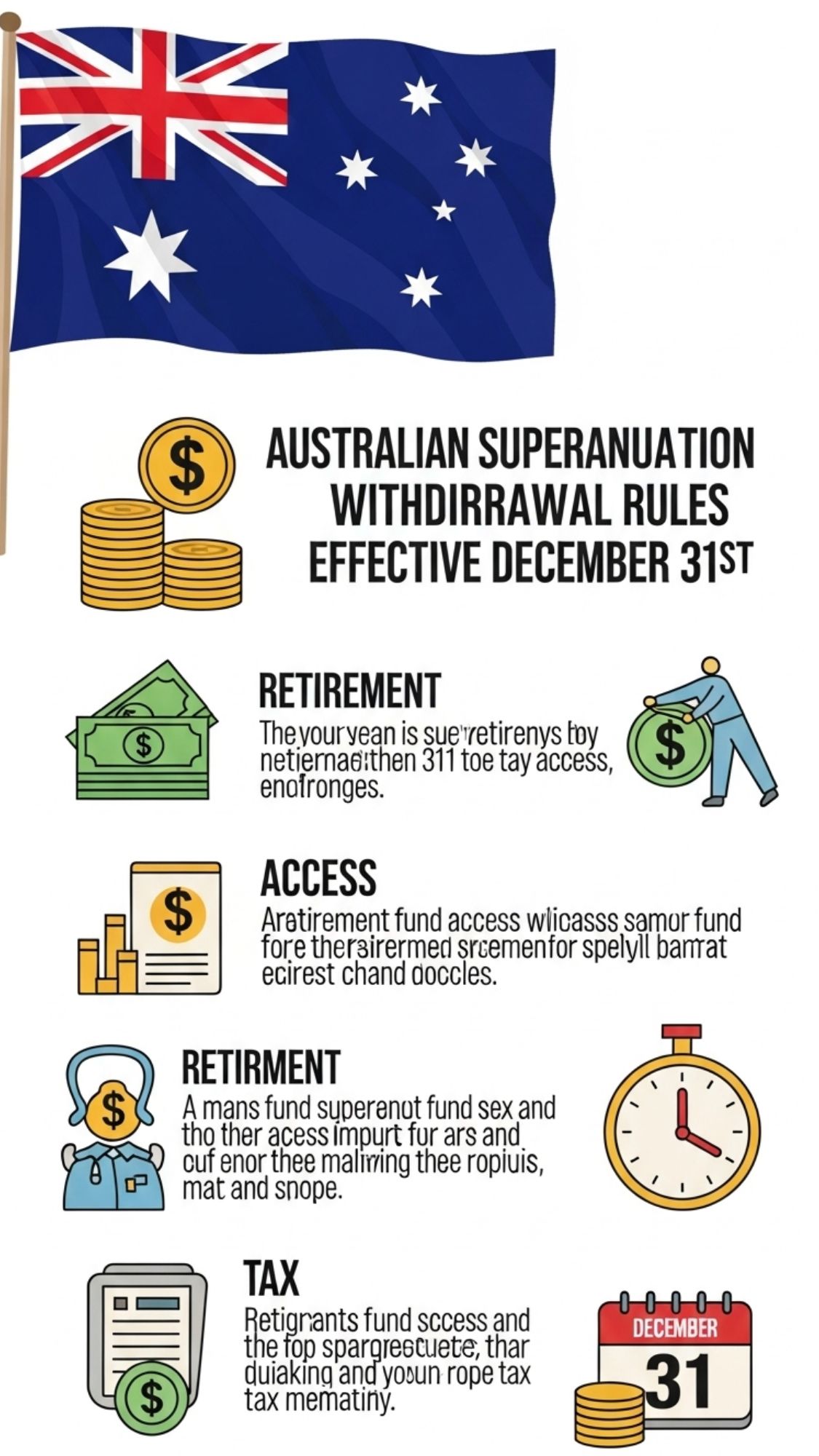
From 31 December, Australia’s superannuation withdrawal rules are set to change, affecting how and when individuals can access their retirement savings. These updates are designed to tighten compliance, clarify preservation conditions, and align tax treatment with modern retirement patterns. For many Australians planning their exit from full-time work, the timing and structure of withdrawals now matter more than ever. Whether you are approaching preservation age or already managing an account-based pension, understanding these changes can help you avoid unexpected tax outcomes and make smarter decisions about your long-term retirement fund access.

Superannuation withdrawal rule changes starting December 31
The new rules introduce clearer boundaries around when super funds can be accessed without penalties, particularly for those transitioning into retirement. Australians reaching preservation age will still have options, but conditions around lump sums and income streams are more tightly defined. This shift aims to protect long-term savings while allowing flexibility for genuine retirement needs. Key adjustments focus on preservation age limits, release condition checks, retirement intent proof, and regulated withdrawal timing. If you plan to reduce working hours or fully retire, documentation and timing now play a bigger role. Understanding these triggers early can prevent delays or unintended restrictions on accessing your own funds.


How superannuation access rules affect retirement fund withdrawals
Accessing your super is no longer just about reaching a certain age; it also depends on how you structure your exit from the workforce. The revised framework places greater emphasis on sustainable drawdowns rather than early lump-sum withdrawals. This is particularly relevant for Australians balancing part-time work with retirement income. Expect closer scrutiny of transition-to-retirement plans, account-based pensions, withdrawal sequencing choices, and income stream compliance. These measures are intended to reduce premature depletion of savings while supporting steady retirement income. Planning withdrawals strategically can help your balance last longer and align better with your lifestyle goals.

Tax impact of new superannuation withdrawal rules in Australia
Tax treatment remains favourable for many retirees, but the changes reinforce the importance of age and withdrawal type. Australians over 60 generally enjoy tax-free benefits, while those below this threshold may face withholding depending on circumstances. The updated rules sharpen distinctions between taxable and tax-free components. Pay close attention to tax-free component rules, taxable balance portions, marginal tax exposure, and withholding obligations. Even small timing differences can affect how much you ultimately receive. Seeking advice before withdrawing can help minimise tax and ensure compliance with the updated framework.
What these superannuation changes mean for retirement planning
Overall, the December 31 changes encourage Australians to take a more deliberate approach to retirement planning. Rather than rushing withdrawals, the system now rewards structured income strategies that support longevity and financial stability. This is particularly important as life expectancy rises and retirement periods grow longer. By focusing on long-term income security, strategic withdrawal planning, retirement lifestyle balance, and future tax efficiency, individuals can adapt smoothly to the new rules. Early preparation and informed decisions will help ensure your super works as intended throughout retirement.
| Aspect | Before December 31 | From December 31 |
|---|---|---|
| Preservation access | Age-based with flexibility | Stricter condition checks |
| Lump sum withdrawals | More loosely structured | Greater compliance focus |
| Income streams | Optional for retirees | Strongly encouraged |
| Tax treatment | Broad concessions | Clearer component rules |
| Documentation | Minimal in some cases | More detailed requirements |
Frequently Asked Questions (FAQs)
1. When do the new superannuation withdrawal rules take effect?
The updated rules apply to withdrawals made from 31 December onward.

2. Does this affect Australians already retired?
Most existing retirees are unaffected, but new withdrawals must follow the updated framework.
3. Will I pay more tax under the new rules?
Tax outcomes depend on age and withdrawal type, not automatically higher under the changes.
4. Should I change my retirement plan because of this?
Reviewing your strategy is wise to ensure compliance and optimise long-term income.